
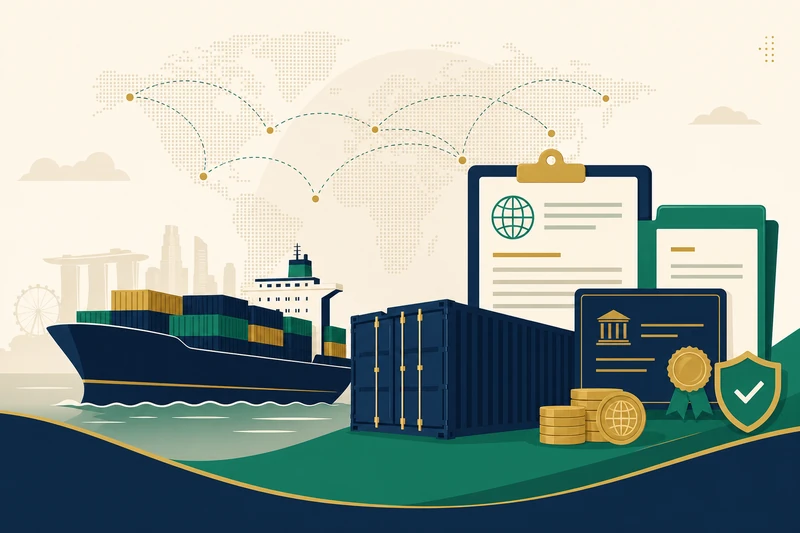
Trade runs on timing. You often have to pay your supplier on shipment, yet your own customers do not settle for 30, 60, or 90 days. Trade financing exists to bridge that gap so a cash-flow squeeze never costs you the next shipment or the next deal.
What trade financing covers
When a business buys before it sells, or sells before it gets paid, the bank can step in to fund the trade cycle. Kenny helps Singapore traders, distributors, manufacturers, and import and export businesses review bank trade facilities from about S$200,000 and above, matched to how they actually trade.
The main tools, in plain English
- Invoice financing: borrow against supplier or customer invoices so paper invoices become usable cash while you wait to be paid.
- Letter of credit: a bank promise to your overseas supplier that payment will be made once the agreed shipping documents are presented.
- Trust receipt: short-term import financing where the bank settles the import bill and releases the documents so you can collect the goods, sell them, then repay after the trade cycle.
A worked import example
A Singapore seafood importer buys S$150,000 of frozen seafood from Vietnam. The shipment arrives, but paying the full amount before selling to restaurants would drain the business. The bank grants a trust receipt, releases the documents, the importer collects and sells the stock, then repays the bank once customers have paid.
When it fits
Trade financing suits trading companies, distributors, and manufacturers with overseas suppliers and regular import or export payment cycles. Facilities are short term, often around 30 to 180 days, sized to your trade cycle.
What speeds it up
Have your purchase orders, commercial invoices, packing lists, and shipping documents such as the bill of lading ready. Kenny will tell you exactly what each facility needs and which one fits your cycle best.
Illustrative guidance only. Subject to eligibility, valuation, lender criteria, and approval. No guaranteed approval.