
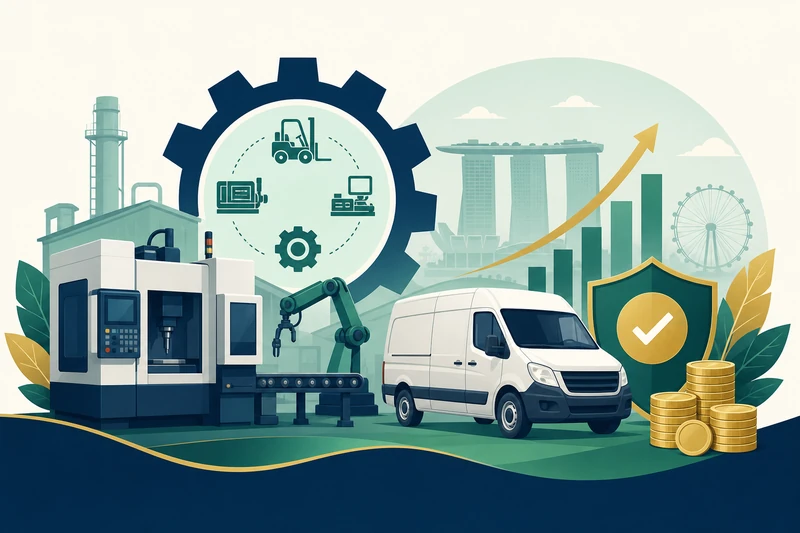
Equipment is what lets asset-heavy businesses earn. The catch is that the machines that generate revenue often cost more upfront than a business wants to part with in one go. Machinery and equipment financing spreads that cost over the working life of the asset, so the equipment can pay its own way as you repay.
What machinery financing is
This is asset-backed financing for the equipment a business needs to operate and grow. The key requirement is that the asset is tangible, identifiable, and holds resale value, because the lender takes the equipment itself as security.
Why the asset matters
The resale value of the machine is central. The lender wants an asset it could repossess and sell if it ever needed to, which is why clearly identifiable equipment with a real second-hand market tends to be the easiest to finance.
What can be financed
Common examples include printing machines, cranes and excavators, manufacturing equipment, commercial vehicles and heavy machinery, and in some cases kitchen and food-and-beverage equipment. If it is tangible and holds value, it is worth a conversation.
A worked example
Instead of paying S$200,000 upfront for a new excavator, a contractor spreads the cost over a loan tenure. The machine earns revenue on site while the business repays, and the lender holds the equipment as backup security.
When it fits
This route suits construction, manufacturing, logistics, printing, and other asset-heavy businesses investing in equipment that directly supports revenue. Illustrative splits are often about 80 percent financed and 20 percent deposit, though the exact share depends on the asset and the lender.
What speeds it up
Have the details of the equipment, its price, and the supplier or quotation ready. Kenny will review the asset and come back with an indicative financing structure.
Illustrative guidance only. Subject to eligibility, valuation, lender criteria, and approval. No guaranteed approval.