
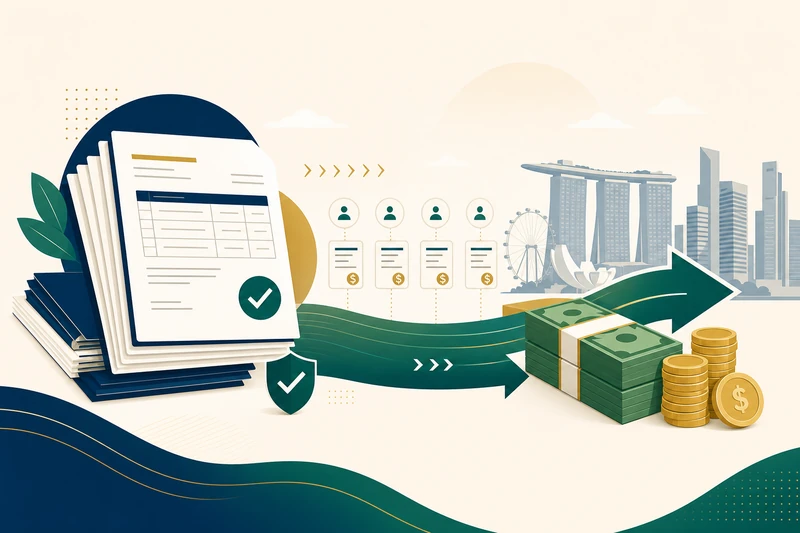
For a lot of B2B businesses, the cash is not the problem. The waiting is. You have delivered the work and issued the invoice, but the money is locked behind 60 or 90 day payment terms while payroll and the next order will not wait. Factoring turns those unpaid invoices into cash you can use now.
What factoring is
Factoring, also called receivables financing, lets a business get paid earlier on invoices its customers have not settled yet. The funder advances a portion of the invoice value upfront and releases the balance, less fees, once your customer pays.
Why debtor quality is central
This is the part owners often miss. With factoring, the funder is largely relying on the quality of your debtors, not only on your own profile. Strong, reliable customers such as established corporates or government-linked buyers make the case far easier.
A worked example
A supplier delivers S$100,000 of goods to a reliable corporate customer on 90 day terms. Rather than waiting three months, factoring lets the supplier access most of that value now, so it can pay its own suppliers, cover payroll, or take the next order without stalling.
When it fits
Factoring suits B2B businesses, contractors, and suppliers with large corporate, government-linked, or otherwise dependable debtors and long payment cycles. It works best when invoices are clean and verifiable.
What speeds it up
Have a sense of your debtor list, your usual payment terms, and a few sample invoices ready. Kenny will review whether factoring fits and what an indicative advance might look like.
Illustrative guidance only. Subject to eligibility, valuation, lender criteria, and approval. No guaranteed approval.